Good IP decisions rest on an accurate view of what you hold. An intellectual property audit is a structured look at the rights you use, the rights you already own and the ones you are still acquiring.
At Basck, audits are run by a team of professionals who understand both the law and the technology behind it. We go through your filings, your agreements and the assets nobody has got round to registering yet, then set all of it against what the business is actually doing. That comparison is where the gaps show up.
What is involved in an IP audit?
IP audits take one shape with two patents, another with a portfolio spread across a dozen territories. What goes into it depends on why you are doing it.
Almost every audit starts by listing everything you hold: registered rights such as patents and trade marks, plus the unregistered ones that might slip off the record. For those on a register, the check covers whether they remain in force and whether fees are up to date.
Ownership is the other area that rarely gets left out. The audit checks whether the rights belong to the company, who else may use them and on what terms, and whether anyone outside is claiming ownership or rights in them. It goes in both directions, since somebody may be using your IP without permission while you may be relying on somebody else’s.
Where the purpose calls for it, the audit reaches further. IP policies can be reviewed as well, from rules on confidential information through to agreements with employees and contractors.
Expect to be asked for materials: existing IP policies and strategies, agreements with an intellectual property element, a list of the rights you hold with supporting documentation, and a description of any disputes.
Benefits of Conducting IP Audits
Most portfolios hold surprises. An IP audit brings them out while you still have room to decide what to do about them.
- A full list of what you own: companies often hold more IP than they can name, and anything that arrived with an acquisition or a collaboration can be overlooked or poorly recorded. Everything lands in one inventory, down to the potentially protectable IP nobody has protected yet.
- Blank spots on your protection map: a registered IP right only works in the territory it was granted for. Sell into a market you never filed in, and you may lack the registered protection you rely on at home An audit compares your filings with the markets you actually sell into.
- Rights that cost more than they return: keeping rights alive takes money whether or not they earn it back. You find out which ones pull their weight and which ones you have been funding out of habit.
- Answers ready before the questions come: investment or acquisition talks can open from one day to the next, and the IP questions land with a deadline counted in days. A documented portfolio means you answer more quickly and with less reconstruction.
Why and to whom is it useful?
IP audits matter most when the stakes rise. When the business changes direction, what you hold may no longer support where you are heading. When you raise money, investors ask which rights you have and whether ownership stands up. A buyer or a partner asks the same, then adds one more question: can those rights be transferred at all?
Rising renewal costs push companies to look as well, as does the ambition to build income from what you already own. Before a licensing deal or a dispute, ownership and validity have to withstand close scrutiny.
Founders, CTOs and the teams building the technology have the most to gain. They know their product inside out but rarely have time to map their own IP. In healthtech and greentech, where value sits across patents, software and data at once, an audit puts the whole picture in one place.
FAQ
How often should companies conduct intellectual property audits?
There is no fixed schedule that fits every business. It helps to review your IP regularly, and to run a dedicated audit whenever something significant changes – a shift in strategy, a new market, an upcoming funding round, or a planned transaction. The value of IP moves with your technology and your commercial context, so a portfolio that looked complete a year ago can develop gaps as the business grows. Treating the review as a recurring habit, rather than a one-off, keeps those gaps from going unnoticed.
How long does a comprehensive IP audit usually take to complete?
It depends on what is being reviewed and how ready the information is. Several factors shape the timeline: the size and structure of your portfolio, the depth and scope you need, and the number of jurisdictions involved. Unregistered rights can take longer to document than registered ones. So does a large or complex set of agreements, or any ongoing disputes that need looking into. The purpose matters too – a routine review is quicker than an audit preparing you for investment or a transaction. In practice, one of the biggest variables sits on your side: how well organised your records are, and how quickly the relevant documents reach the team.
What are the main risks of not conducting regular IP audits?
One significant risk is using someone else’s IP without realising it, which can lead to pulling a product from the market or paying damages. Depending on the scope of the audit, that may indicate a need for separate clearance or freedom-to-operate work.
Close behind is the reverse problem: not being able to prove that the rights you rely on are actually yours. Without a regular review, registered rights can lapse quietly when renewal deadlines slip, while other rights keep drawing fees despite not adding much. Gaps in protection often surface at the worst possible moment – during due diligence, when an investor or acquirer is the one to find them. And value that could have been licensed or sold simply stays hidden.
Who should be involved in conducting an intellectual property audit?
An IP audit works best as a shared effort. On your side, it helps to involve the people who create and manage relevant assets: legal or IP staff, marketing and brand owners, the people responsible for your website and digital products, R&D, and designers, together with anyone holding the key agreements and policies. Carrying out the review itself can benefit from a mix of legal and technical expertise, since assessing ownership, validity and value rarely sits with one discipline alone.
Your IP Attorneys

Katarzyna Wit
European Trade Mark & Design Attorney, Manager of Scandinavia Operations and Wrocław Office

John Hård
European Patent Attorney

Göran Gustavsson
Swedish Patent Attorney
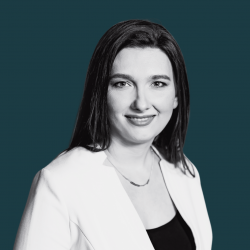
Dr Magdalena Domoń
European Patent Attorney

Paulina Zarycka
European Trade Mark & Design Attorney, Polish Patent Attorney

Bianca Peachey
Of Counsel
Katarzyna Wit
European Trade Mark & Design Attorney, Manager of Scandinavia Operations and Wrocław Office
- Wrocław, Poland
Kasia is a Polish Patent Attorney and EUIPO Professional Representative operating in Wroclaw, Poland. Kasia works on projects related to trade marks, designs, as well as oppositions and negotiations. She conducts IP audits and advises clients on strategies for obtaining IP protection and sustainable inventions. Kasia is the manager of Wroclaw office and coordinates work at Basck Scandinavia. Prior to joining Basck, Kasia worked as a legal communication specialist at Credit Suisse and in court & enforcement proceedings at Noble Bank S.A. Kasia holds a Master in Laws from the University of Wrocław.
John Hård
European Patent Attorney
John is a European and Swedish Patent Attorney with over 20 years of experience in various IP roles. John has substantial experience in patenting software, control systems and user interface technologies. He prepares and prosecutes patent applications primarily in the telecom disciplines and computer science disciplines, as well as in mechanical disciplines. As a tutor John has extensive practice in training patent engineer staff, project team leaders and managers in patent matters and also has substantial experience in conducting workshops and project reviews for identifying inventions and for developing design around solutions.
Göran Gustavsson
Swedish Patent Attorney
- Lund, Sweden
Göran is a European and Swedish patent attorney and the head of Basck Scandinavia. He has more than 30 years experience of helping companies with their patent portfolios, IP commercialisation and strategic development of innovation. Göran with Gipon Konsult AB joined Basck in May 2019. Göran previously worked as a Business Support Manager in Awapatent AB.
Dr Magdalena Domoń
European Patent Attorney
Magda is a Polish and European Patent Attorney, specialising in intellectual property protection in the fields of life sciences, biochemistry, and bioengineering. She works with both domestic and European patents, handling processes related to obtaining and enforcing patent rights. With extensive scientific knowledge and experience in intellectual property, she supports clients in securing innovation and developing effective patent strategies. She holds a PhD in Biochemistry from Université Lyon 1 and the Nencki Institute of Experimental Biology.
Paulina Zarycka
European Trade Mark & Design Attorney, Polish Patent Attorney
- Warsaw, Poland
Paulina Zarycka is a Polish Patent Attorney and an EUIPO Professional Representative with expertise in trade mark oppositions and invalidation proceedings, trade mark and design filings, IP clearance searches, coexistence agreements, and patent validations in Poland. She has contributed significantly to successful trade mark coexistence agreements between Polish SMEs and major European companies. She helps clients identify which inventions, names, or designs may require protection and align their IP strategy with future plans, emphasising practical and cost-effective guidance. Paulina holds a Master of Law degree from the University of Wrocław and a Bachelor’s in Romance Philology from the University of Warsaw.
Bianca Peachey
Of Counsel
- New York, US
Bianca is a passionate advocate and dedicated corporate counsel with deep experience across global IP, technology, and innovation. She has built patent practices for Global 500 brands, advised on M&A involving intellectual assets, designed legal process outsourcing solutions, and was part of a leading international IP law firm. Bianca began her career in a neuroscience discovery lab before joining the University of Oxford’s Technology Transfer Office. She has since worked across the patent ecosystem - leading an offshore LPO IP team, designing patent analytics services for CPA Global, supporting IP-related M&A at Thomson Reuters, to her time at Marks & Clerk LLP. Before building an award-winning patent practice at Starbucks, she served as Associate Vice President of Patents at L Brands (parent of Victoria’s Secret, Pink, and Bath & Body Works). Bianca’s approach is rooted in science, strategy, and commercial impact. Bianca's practice spans portfolio development, litigation management, negotiation and settlement strategy, creative anti-patent troll defences, and trade secret programs. A member of the Chartered Institute of Patent Agents, Bianca secured the first USDA Plant Variety Protection for coffee seeds by a U.S. company and was named among the WIPR Diversity & Inclusion Top 100 (2025).